In-Depth Analysis of Carbon Fiber vs Kevlar: Material Selection Guide for Engineers
For engineers and technical specialists, the choice between carbon fiber and Kevlar is a critical decision influenced by the specific demands of their applications. The carbon fiber market, projected to reach USD 10.66 billion by 2025, underscores its rising relevance across numerous industries. This guide delves into the material properties, engineering applications, testing protocols, and failure prevention strategies associated with these composites. Drawing from over two decades of experience in composite materials, Impact Materials provides valuable insights to guide you in selecting the appropriate material for your engineering needs.
Key Insights
- Carbon fiber boasts tensile strengths up to 6,000 MPa, making it a top choice in aerospace engineering.
- Kevlar’s superior impact resistance is essential for protective gear manufacturing.
- Hybrid composites leverage the strengths of both carbon fiber and Kevlar, offering balanced performance.
- Engage with ISO 9001 certified suppliers to ensure material quality and performance consistency.
Diving into Material Characteristics
High-Tensile Strength of Carbon Fiber
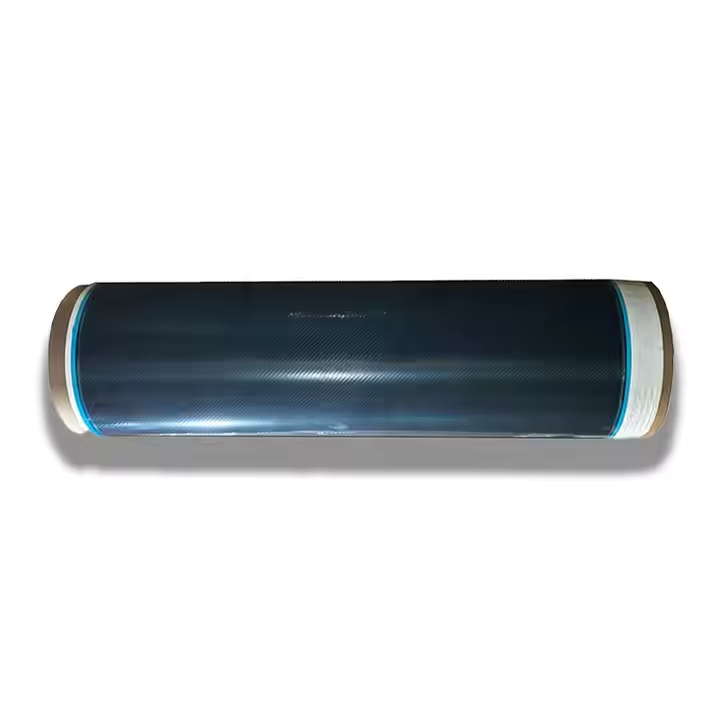
Carbon fiber is distinguished by its exceptional tensile strength, reaching up to 6,000 MPa, a property highly sought after in aerospace and automotive engineering. With a density of approximately 1.6 g/cm³, its strength-to-weight ratio is unrivaled, facilitating applications that require lightweight yet robust materials. A notable example is the use of 3K Twill Carbon Fiber Fabric Epoxy Resin Prepreg in aerospace structures, such as fuselage and wing composites.
Kevlar’s Impact Resistance and Flexibility
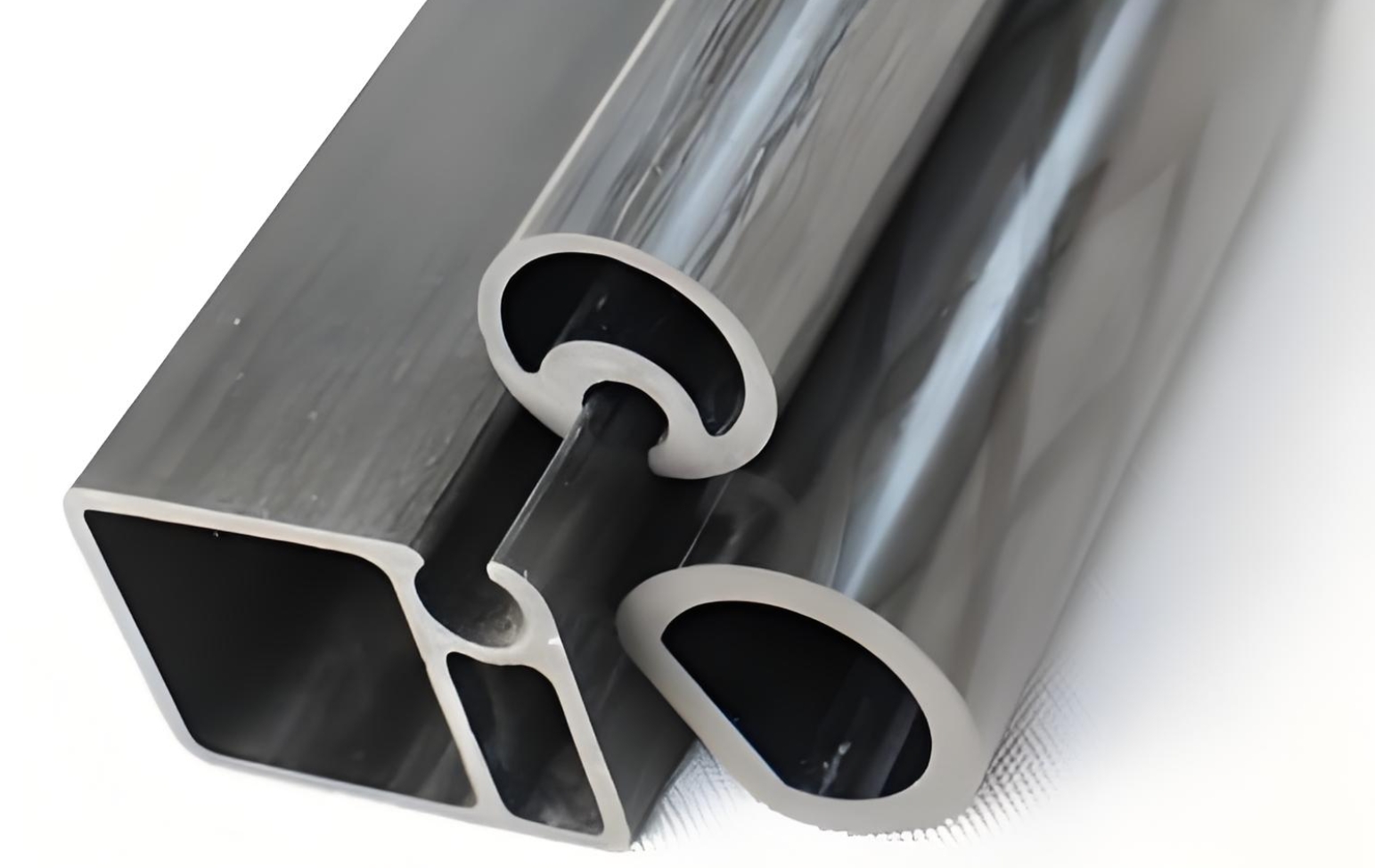
Kevlar, categorized as an aramid fiber, is renowned for its superior impact resistance, which is crucial for ballistic protection and safety equipment. With a tensile strength around 3,620 MPa and elongation at break of approximately 4.4%, Kevlar demonstrates the flexibility required in dynamic applications like Special Section Pultruded Carbon Fiber Rods.
Hybrid Compositions: Merging the Best of Both
The innovative blend of carbon fiber and Kevlar in hybrid fabrics offers a strategic combination of rigidity and flexibility, optimizing performance in automotive components and sports gear. When designing with carbon Kevlar composites, it’s essential to evaluate application-specific requirements, including stress tolerances and environmental exposure.
Industrial Applications and Engineering Considerations
Aerospace Industry Requirements
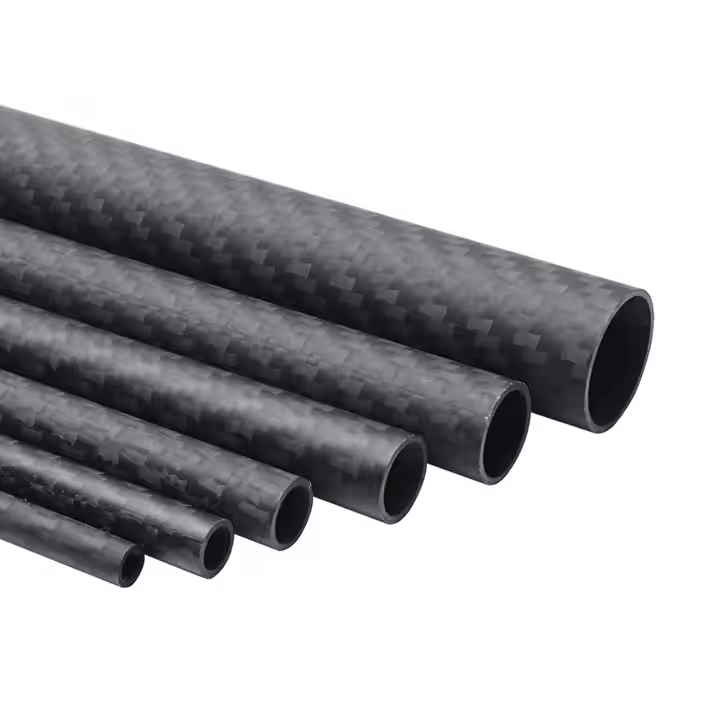
Carbon fiber’s integration in aerospace engineering is primarily due to its high stiffness-to-weight ratio, essential for components such as airframes and control surfaces. Products like the Customized Round CFRP Carbon Fiber Tube exemplify the material’s capability to support lightweight yet structurally demanding applications.
Automotive Engineering Solutions
The balance between performance and safety in automotive design is often achieved through the use of carbon fiber for its strength-to-weight benefits and Kevlar for its impact resilience. Engineers frequently select carbon Kevlar composites to maximize both vehicle efficiency and occupant safety.
Ballistics and Protective Equipment
For ballistic and protective gear, Kevlar remains the material of choice due to its high impact resistance properties, validated by ASTM D3039 testing. It retains structural integrity under extreme stress, ideal for equipment like bulletproof vests and helmets. Aramid fiber composites provide an optimal solution for scenarios requiring both protection and maneuverability.
Highlighted Products for Material Comparison
Explore top-performing carbon fiber vs kevlar products available through Impact Materials, trusted globally across over 120 countries.
Technical Specifications and Material Analysis
Comparative Analysis of Material Properties
| Property | Carbon Fiber | Kevlar |
|---|---|---|
| Tensile Strength (MPa) | 3,500 – 6,000 | 2,620 – 3,620 |
| Density (g/cm³) | 1.6 | 1.44 |
| Elongation at Break (%) | 1.5 – 2.0 | 4.4 |
| Temperature Resistance (°C) | Up to 200 | Up to 160 |
Testing Standards and Quality Assurance
For quality assurance and compliance, ensure that materials meet international testing standards such as ASTM and ISO. Collaborating with a carbon fiber vs kevlar supplier that adheres to these standards is crucial for maintaining the integrity of your projects.
For more information and to explore diverse carbon fiber and Kevlar solutions, visit Impact Materials for carbon fiber vs kevlar solutions.